

Brantwood, Wisconsin was once a bustling hub of Finnish-American life. In the late 1800s and early 1900s, multitudes immigrated from Finland to the Great Lakes/Northwoods region. They worked in mines and logging camps, later settling in remote, wooded areas that resembled their homeland. According to local historian Bill Hoffman, “At one time, it was thought that the Brantwood-Clifford area had the largest population of Finnish immigrants in the state of Wisconsin.” They had a co-op, Finnish was spoken in public, and cross-country skiing was a way of life — all hallmarks of the Nordic immigrants. Jim Palmquist, another Brantwood resident, recounts this (possibly apocryphal) story. “Years ago, when fire towers were manned during the forest fire season, the tower personnel were advised not to be concerned about smoke from Brantwood on Saturday night as it was most likely coming from the Finnish saunas.”
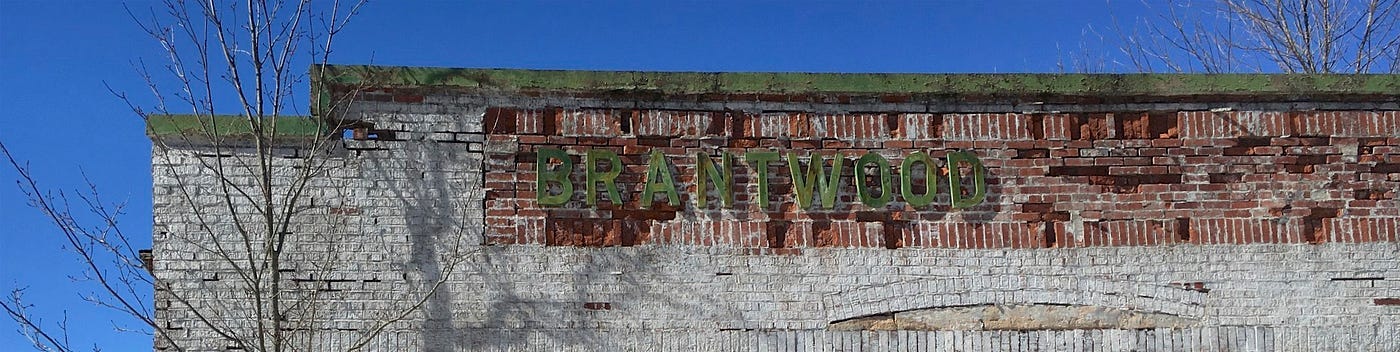
Over the years, the population in the area has declined; the co-op even closed. But there remain many signs of Finnish immigration. Cross-country trails are still groomed, streets have names like Suomi, Maki, and Hannula, and saunas are still fired up on Saturday evenings. This past spring, Julie and I visited Brantwood to see, and use a few of their saunas. We first discovered the area via articles and videos about the double-decker sauna at Palmquist Farm, which is where we stayed. Presented below are a few of Brantwood’s many saunas.
TWO-STORY SAUNA
Jim & Helen Palmquist have hosted scores of travelers over the years. In 1949, Palmquist Farm opened their doors to guests, sharing their 800 acres of land and Finnish heritage with visitors. They have cross-country trails, sleigh-rides, and two wood-burning saunas. The smaller of the two is a ‘sauna cabin’ which combines sauna with your lodging — great for those who want privacy.


Their second sauna, the main attraction for sauna hounds, is a separate building with a large hangout area and two-story hot room. The upper level harkens back to the old Finnish savusaunas that had one elevated platform instead of benches. The Palmquist sauna is definitely a unique experience. The löyly (steam) hits your feet first instead of your head. This makes for a very even heat. The lower level is setup for washing and would be great spot for vihta treatments.
KNOX CREEK & HILL HOUSE
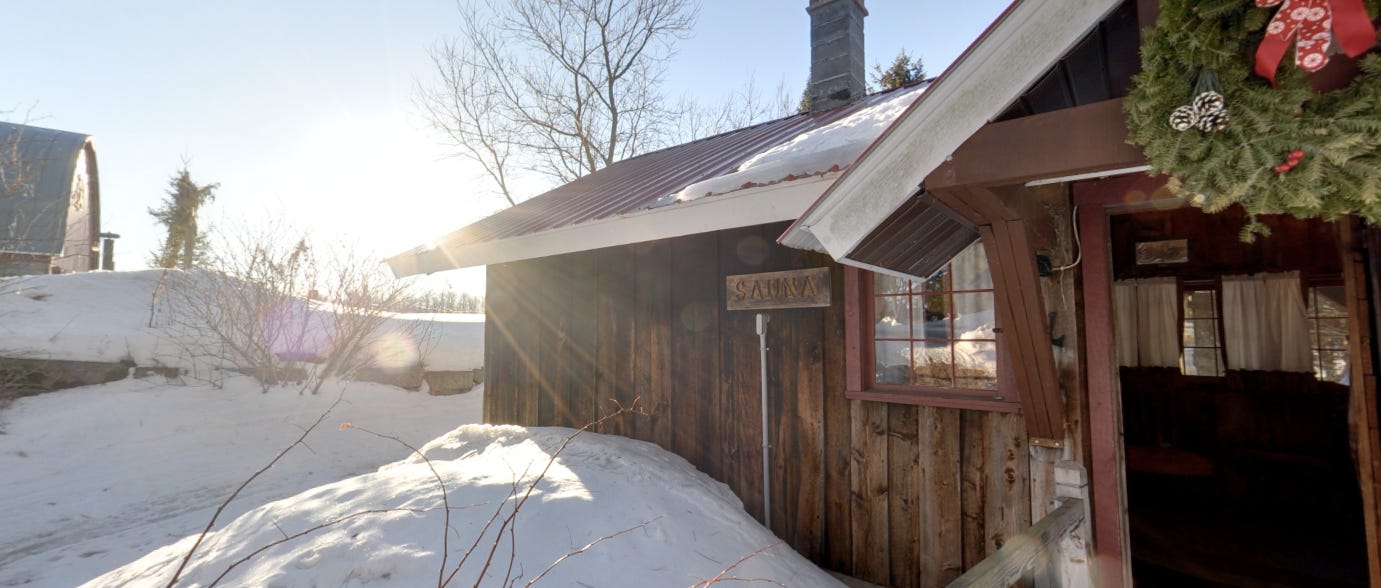
Bill Hoffman (mentioned earlier) doesn’t have any Finnish ancestry. But the combination of growing up in the Brantwood area and his curious nature instilled a degree of Finnishness in him. He was even named “Galvanized Finn of the Month” by The Finnish American Reporter. Bill was instrumental in starting the Knox Creek Heritage Center. Two of their historic saunas are pictured below.


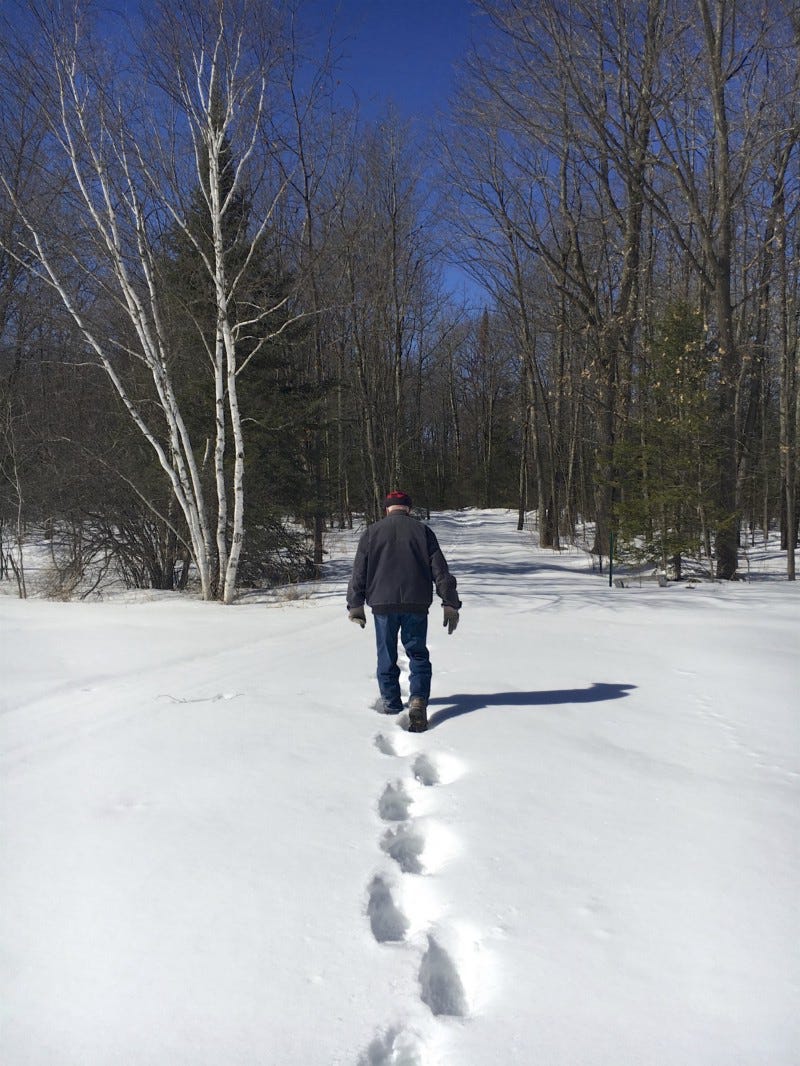
Setting is one of the most important elements of sauna. A sauna enthusiast would rather have a sub-par sauna set in a secluded forest than an amazing sauna in the middle of a big city. When you have both, great location and great sauna, then you’ve got something special! Bill, with the help of his friend Mike Macki, built a special collection of buildings in the middle of the woods. He calls them “Maki Talo” which is Finnish for “Hill House.” It looks like a little Finnish village in the middle of the woods; it even has a small chapel. And no Finnish village in the woods is complete without a sauna.


HAND-HEWN LOG SAUNA
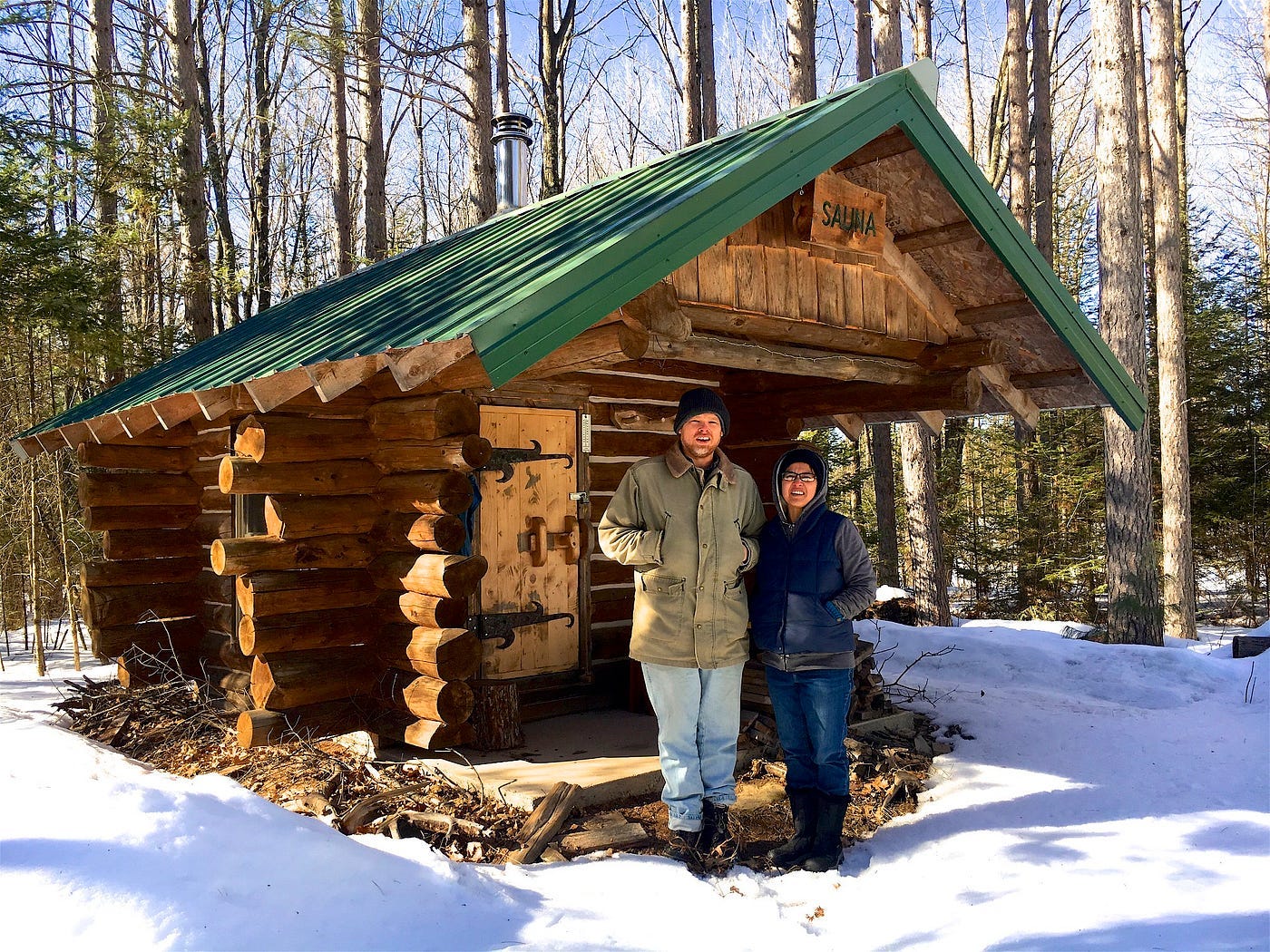
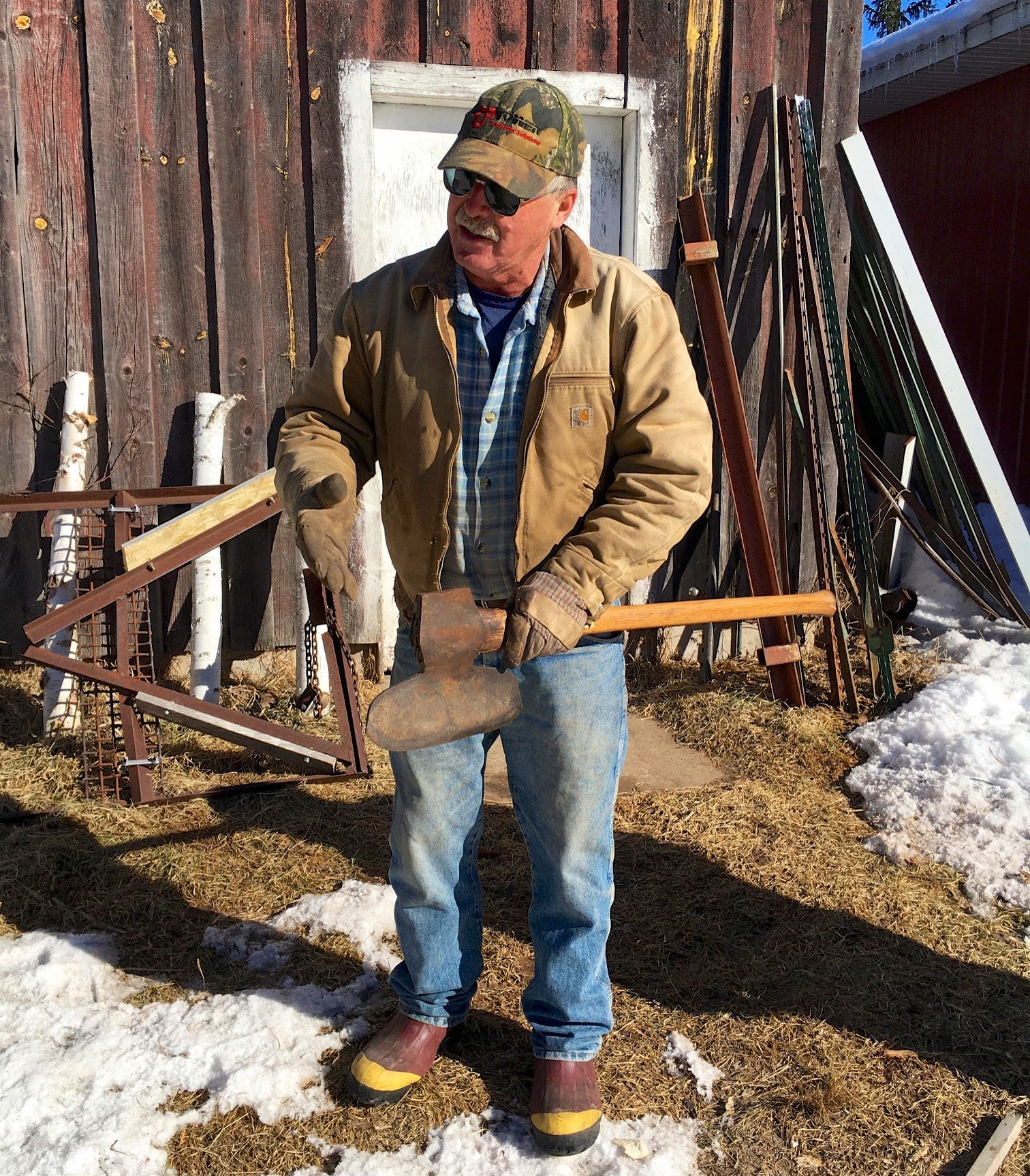
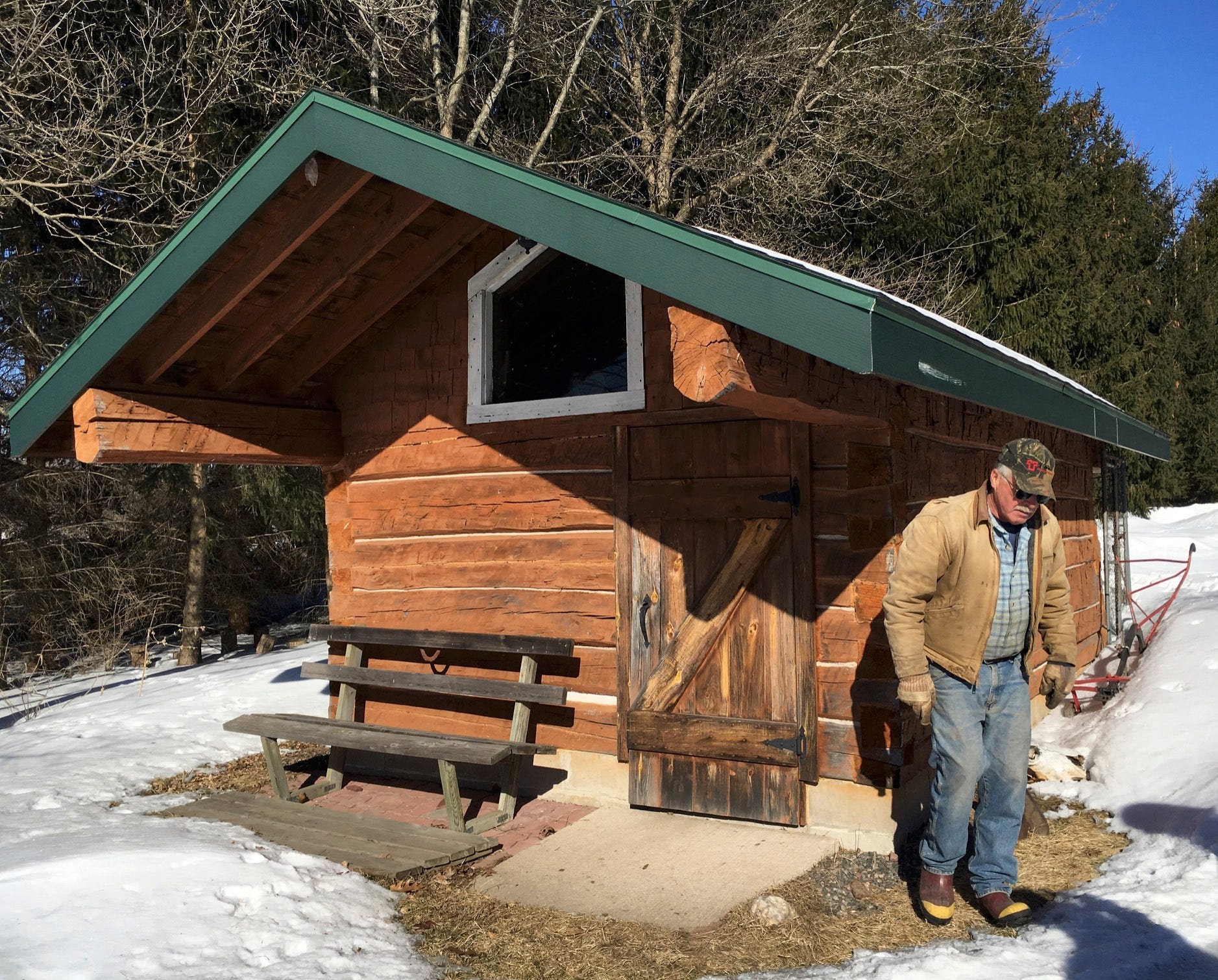
The best sauna heat is achieved with a capable stove and log structure. The large mass of wood slowly absorbs heat, then gently returns it to the sauna bathers. Log saunas take longer to heat (often several hours), but the best things in life take time. In addition to providing the acme of sauna heat, log saunas look great, and sustain cultural tradition. This is why Dan Kivela built himself a log sauna — not just assembled but actually used a broad axe to hand-hew the aspen logs. He has a great setup, complete with rocks from Lake Superior.
WASTI SAUNA
We also had the privilege of visiting Terry Wasti’s sauna — built in 2013. He chose aspen walls instead of cedar. Aspen is a more traditional Finnish sauna material because cedar doesn’t grow in Finland. Terry’s sauna is heated with a Kuuma stove which was made in Tower, Minnesota. We appreciated the decorative touches like the water-tap hooks pictured below. Water is an essential element because historically, sauna was used as a bath — a practice that is still alive and well in Brantwood, Wisconsin.


Special thanks to Jim & Helen Palmquist, Bill Hoffman, Marcie Braski, Ethan & Amanda Bowen, Dan Kivela, Terry Wasti, and Anna Dielschneider.